The UN Climate Change Conference in Belém wrapped up on November 21st 2025, sparking debates, tough decisions, and a spotlight on the role young people must play in driving climate action forward.
This year’s COP, framed as the “implementation COP,” aimed to move beyond promises and focus on how to make climate commitments real. Yet, deep disagreements on finance, trade, fossil fuel pathways, and other areas delayed progress until the final hours. More than 80 countries pushed for a roadmap to phase out fossil fuels, while many advocates and developing nations called for stronger commitments on climate finance, but the final text fell short of expectations. Still, COP 30 offered some wins and signaled that youth-led action and finance mobilization will remain central to the climate fight in the years ahead.
To start off, let’s spotlight climate finance, which remains a critical youth priority…
Related Articles
Climate finance is one of the most important issues for young people today. It determines how we fund adaptation, mitigation, and green economic opportunities, and directly affects whether young people in developing countries can thrive in a low-carbon, climate-resilient future. At COP 30, a major step forward was the adoption of a 2-year work programme on climate finance under the Mutirão decision. This builds on the Baku commitment to mobilize $1.3 trillion annually by 2035 for developing countries. For youth, this money isn’t just numbers on a page. Instead, it represents funding for green jobs, climate-smart entrepreneurship, renewable energy projects, and local adaptation initiatives.
However, there’s a catch: most of this finance is projected to arrive gradually, with adaptation funding set to triple only by 2035. Young advocates, including the Youth for Tax Justice Network (YTJN) warn that waiting this long delays urgent action for communities already facing floods, heatwaves, and climate-related disruptions. Ensuring that funds reach youth-led initiatives and grassroots projects today is critical to create meaningful impact.
Although climate finance was not officially on COP 30’s agenda, discussions dominated much of the conference. Countries explored how to deliver on the New Collective Quantified Goal on Climate Finance adopted in Baku last year, including scaling up public finance under Article 9.1 of the Paris Agreement. The new 2-year programme provides a platform for political follow-up on the Baku-to-Belém roadmap, aiming to mobilize both public and private finance for developing countries, and ensure that youth-focused projects are prioritized. It also allows developing countries to continue pressing for the $300 billion core public finance goal set in Baku, which is crucial to fund youth-driven climate solutions in vulnerable communities.
Regarding Fossil Fuels and the Energy Transition
Energy transition is a critical priority for youth, who are inheriting the consequences of a warming planet. At COP 30, 88 countries supported the idea of a roadmap to phase out fossil fuels, including calls to reform fossil fuel subsidies and accelerate renewable energy deployment. Yet, this language did not make it into the final agreement, leaving the world without a concrete plan to close the ambition gap in Nationally Determined Contributions (NDCs). Without youth inclusion in designing the transition, the shift to low-carbon economies risks leaving young innovators, entrepreneurs, and workers out of emerging green job markets.
Despite these setbacks, COP 30 launched initiatives that could create opportunities for youth leadership:
The Global Implementation Accelerator aims to fast-track NDC and NAP implementation to keep the 1.5°C goal within reach. If structured with youth participation, it could fund youth-led renewable energy projects, innovation hubs, and climate tech startups.
The Just Transition Mechanism was also established to support technical assistance, capacity building, and knowledge sharing, ensuring that communities and workers, especially young people aged 18 - 35 years, can benefit from the green economy.
Additionally, the Belém Mission to 1.5, tasked with reporting on NDC and NAP implementation by COP 31, offers another entry point for youth engagement. While the mechanism currently lacks strong hooks for youth participation, proactive advocacy can ensure that young voices are part of the decision-making, shaping both green jobs and sustainable energy pathways.
What about the conversation on climate adaptation and youth resilience?
COP 30 recognized the urgent need for adaptation finance, with the Mutirão decision calling for it to triple by 2035. This sends a political signal that developed countries must step up support for communities on the frontlines of climate change. For youth, especially in developing nations, this finance is critical as it funds climate-resilient education, green jobs, local adaptation projects, and youth-led innovation hubs that help communities withstand floods, heatwaves, and other climate impacts.
However, many young advocates are concerned that the 2035 target is too far off. Originally proposed for 2030, the delayed timeline and lack of a clear baseline fall short of the urgency young people experience every day. Waiting until 2035 risks leaving youth and their communities exposed to worsening climate impacts, threatening livelihoods, education, and economic opportunities.
Beyond these, a core COP 30 priority was agreeing on indicators for the global adaptation goal. These 59 indicators aim to track finance, technology transfer, capacity building, and even gender-responsive adaptation policies. Some suggest disaggregation by age, gender, geography, and ecosystems, which is a key opportunity for measuring youth engagement and impact in climate action. Unfortunately, last-minute changes weakened the credibility and usability of these indicators, making them harder for young organizations and local projects to operationalize. The next steps remain vague, with potential revisions stretching to 2027, leaving youth-led initiatives in limbo. Strong, clear indicators are essential for youth-led climate programs to access funding, measure impact, and scale solutions.
Another important thing to spotlight would be the fact that after two years of negotiation, COP 30 finally adopted decisions on National Adaptation Plan (NAP) assessments. These recognize the progress developing countries have made while highlighting ongoing challenges in accessing resources, climate data, and technical support. For youth, NAPs are a chance to lead community-level adaptation initiatives, Integrate Indigenous and traditional knowledge into climate solutions, Apply nature-based and ecosystem-based approaches and Promote gender-responsive programs that include young women and marginalized youth
Yet, the COP decision still lacks clear guidance on scaling up support for NAPs and integrating them with national biodiversity and policy strategies. Without these links, young leaders risk being left out of critical funding and decision-making opportunities that would allow them to implement meaningful adaptation actions in their communities.
Was there anything about Trade, Gender, and Inclusion?
Trade and climate policies intersect in ways that have real consequences for youth entrepreneurship, particularly in developing countries. Unilateral trade measures, such as border carbon adjustments and deforestation-related import regulations, remain unresolved. This leaves young entrepreneurs and youth-led green businesses uncertain about their future in global green markets. COP 30 agreed to continue discussions through three subsidiary dialogues on international cooperation, with outcomes to be reported at a high-level event in 2028, creating a window for youth voices to push for fair, inclusive trade policies that enable access to green opportunities.
On the positive side, COP 30 successfully concluded negotiations on the Gender Action Plan, which recognizes that climate vulnerability is shaped by age, gender, race, and disability. For youth, this opens doors to:
Programs that empower young women, girls, and marginalized youth in climate leadership
Opportunities to integrate gender-responsive approaches into national climate policies, reporting, and decision-making
Participation in monitoring and evaluation to strengthen accountability for climate action
By acknowledging these multidimensional factors, COP 30 provides a foundation for equitable youth participation in climate initiatives. Youth-led organizations can now leverage this recognition to design programs, advocate for resources, and drive inclusive climate solutions in their communities.
What’s Next for Youth Engagement in COP?
COP 31 will convene in Türkiye and Young people have a unique opportunity to shape the Action Agenda, pre-COP dialogues, and the implementation of NDCs. Brazil has promised roadmaps for deforestation and fossil fuel transition in the next year, while the Global Implementation Accelerator could provide youth-led organizations with resources to scale up climate solutions. Young leaders, especially from developing countries, should use this momentum to push for domestic implementation, green job creation, and youth-inclusive financing mechanisms.
Related Articles
News
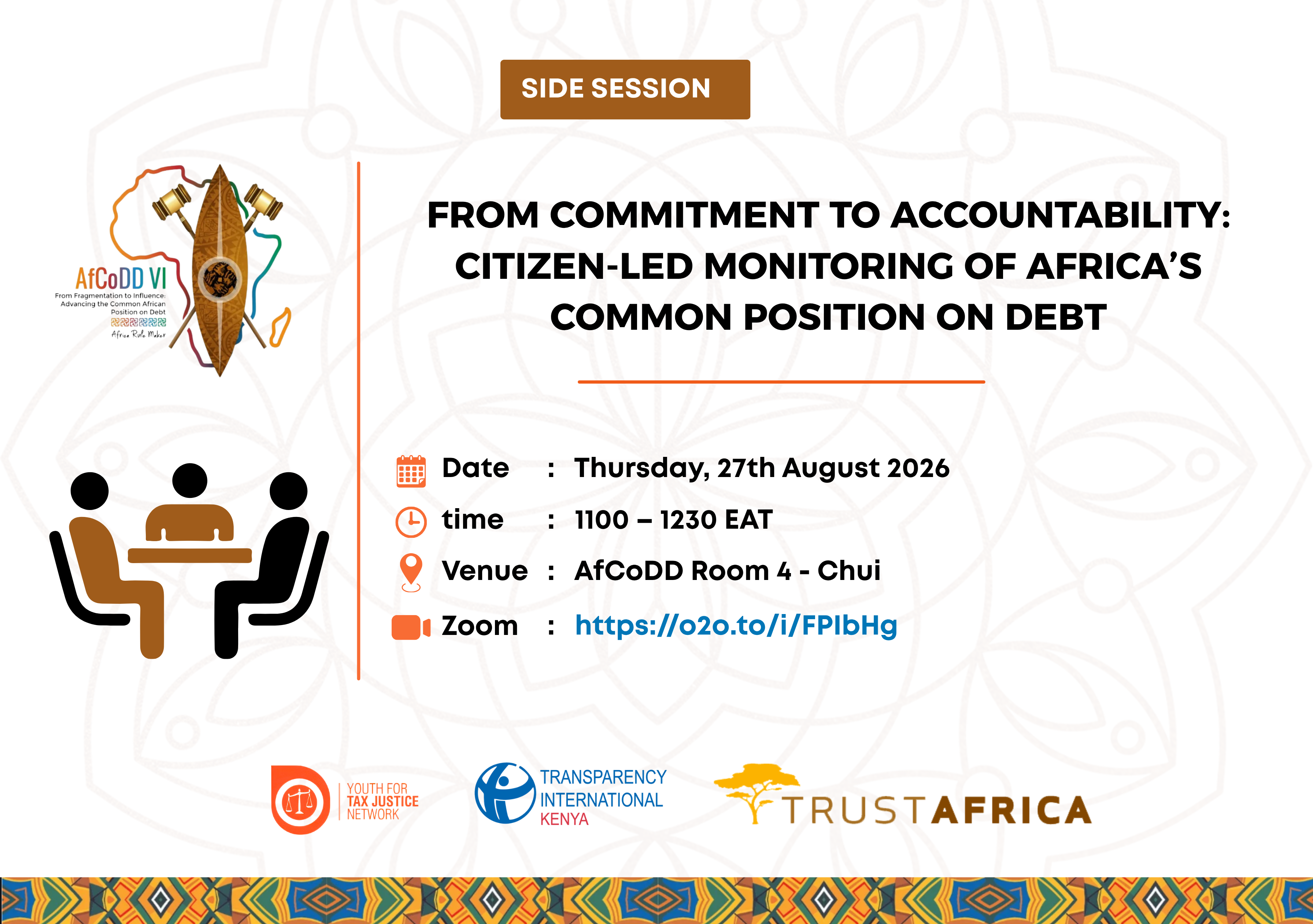
From Commitment to Accountability: Citizen-Led Monitoring of Africa's Common Position on Debt
Youth for Tax Justice Network brings its youth-led monitoring model to this partnership. Young people across Africa carry the weight of debt decisions made today. YTJN insists they...
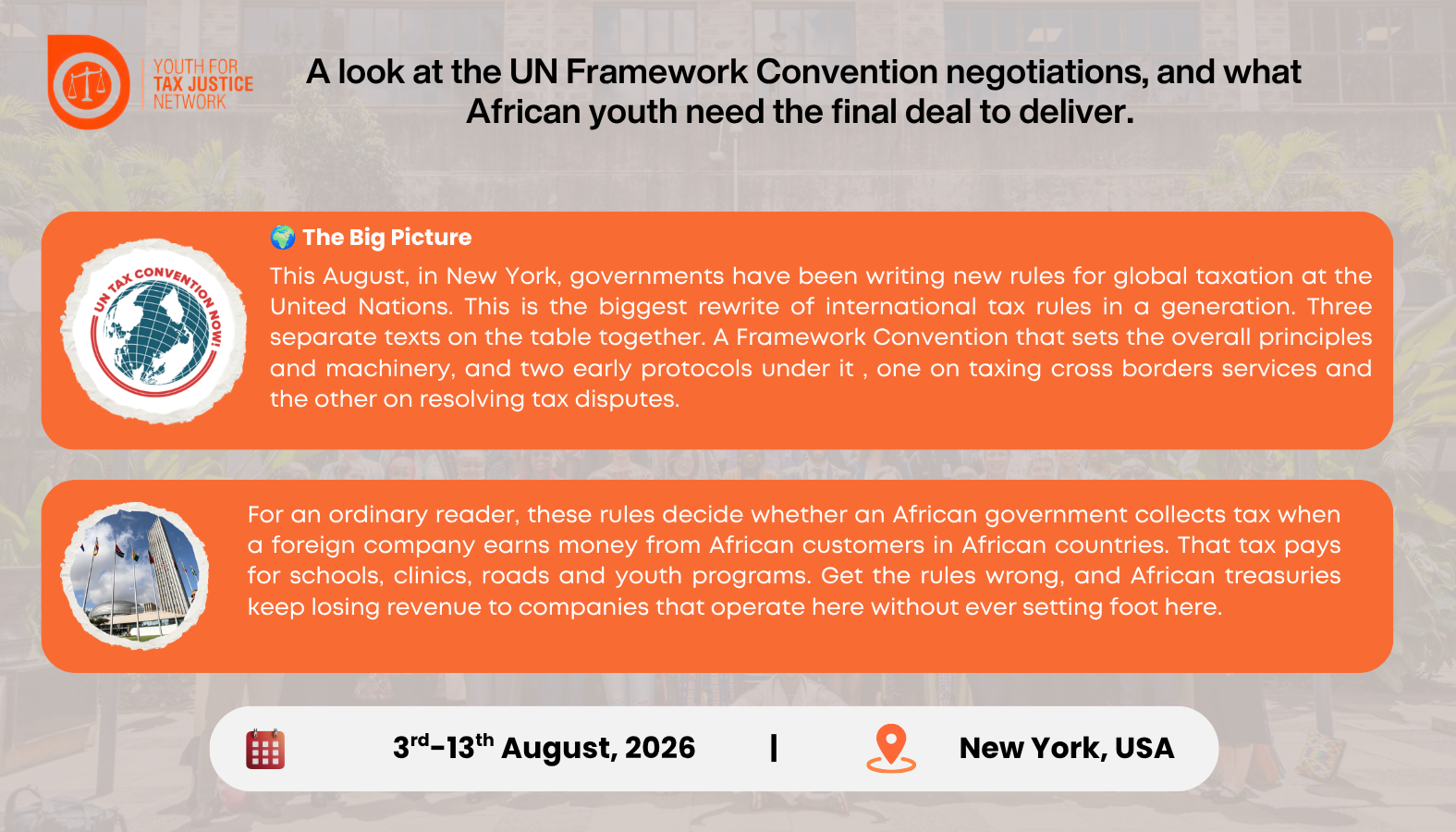
A look at the UN Framework Convention negotiations, and what African youth need the final deal to deliver.
The Framework Convention is the Parent Document. It sets out shared principles and critically; it decides how the whole new system relates to the thousands of existing bilateral ta...
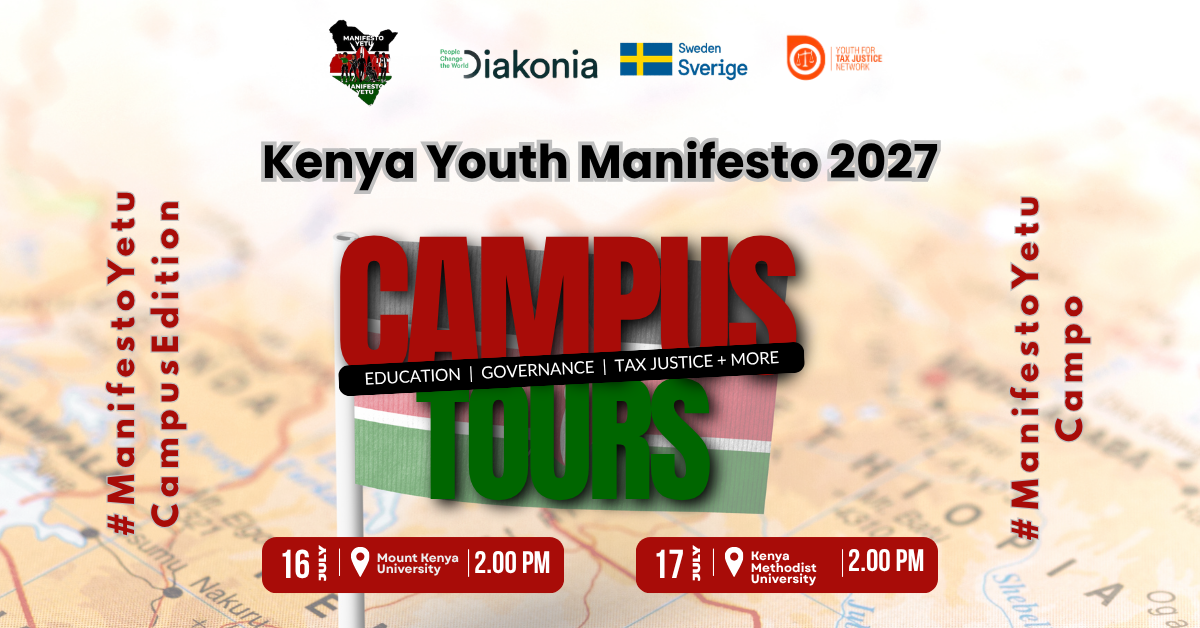
YTJN and Manifesto Yetu Launch University Consultations for the Kenya Youth Manifesto 2027
Youth for Tax Justice Network (YTJN) has partnered with the Manifesto Yetu Initiative to launch university campus consultations across Kenya. The consultations will shape the Kenya...