ECOSOC Youth Forum; Partnerships and Financing for Youth
Compiled by; Ssemujju Lewis Edward, Communications Officer, Youth for Tax Justice Network (YTJN)
The United Nations Economic and Social Council Youth Forum brought together government ministers, UN officials, youth advocates and civil society representatives from across the globe for a session on one of the most consequential questions of our time: who finances the future of young people, and on whose terms?
The answer, heard repeatedly across the room, is that the system is not working. Not because the money does not exist. It does. But because the architecture of global financing was not built with young people in mind, and the political will to change that remains inconsistent.
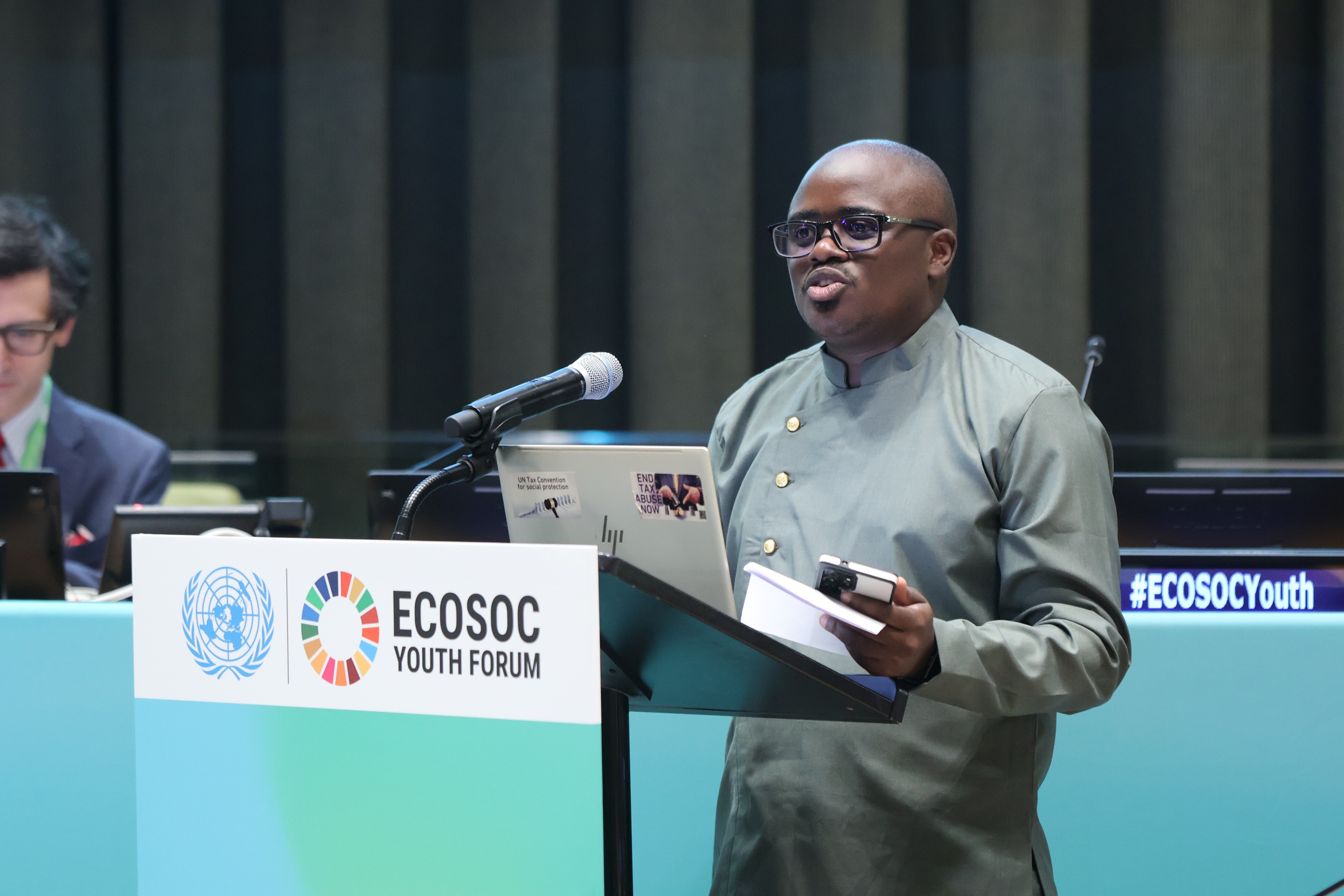
Mr. Allan Muhereza Murangira, Team Lead, Youth for Tax Justice Network, and Regional Focal Point - Tax at FFD Children and Youth Constituency, UN MGCY and Session Moderator
, Team Lead, Youth for Tax Justice Network, and Regional Focal Point - Tax at FFD Children and Youth Constituency, UN MGCY and session moderator, this conversation is deeply familiar. YTJN has long argued that how governments raise and spend public resources is not a technical question, but rather a question of power.
The Gap
There is a $4 trillion annual financing gap standing between the world and the Sustainable Development Goals. Youth unemployment remains three times higher than adult unemployment. Nearly one in four young people globally are not in education, employment or training. In conflict-affected countries, only 6% of official development assistance comes from private financing. And 49% of youth-led organizations operate on less than $5,000 a year.
These figures were cited repeatedly in the session. In addition, it was noted that this situation is the result of choices. Choices about what gets funded, who sits on financing boards, which enterprises qualify for development finance, and whose data shapes policy.
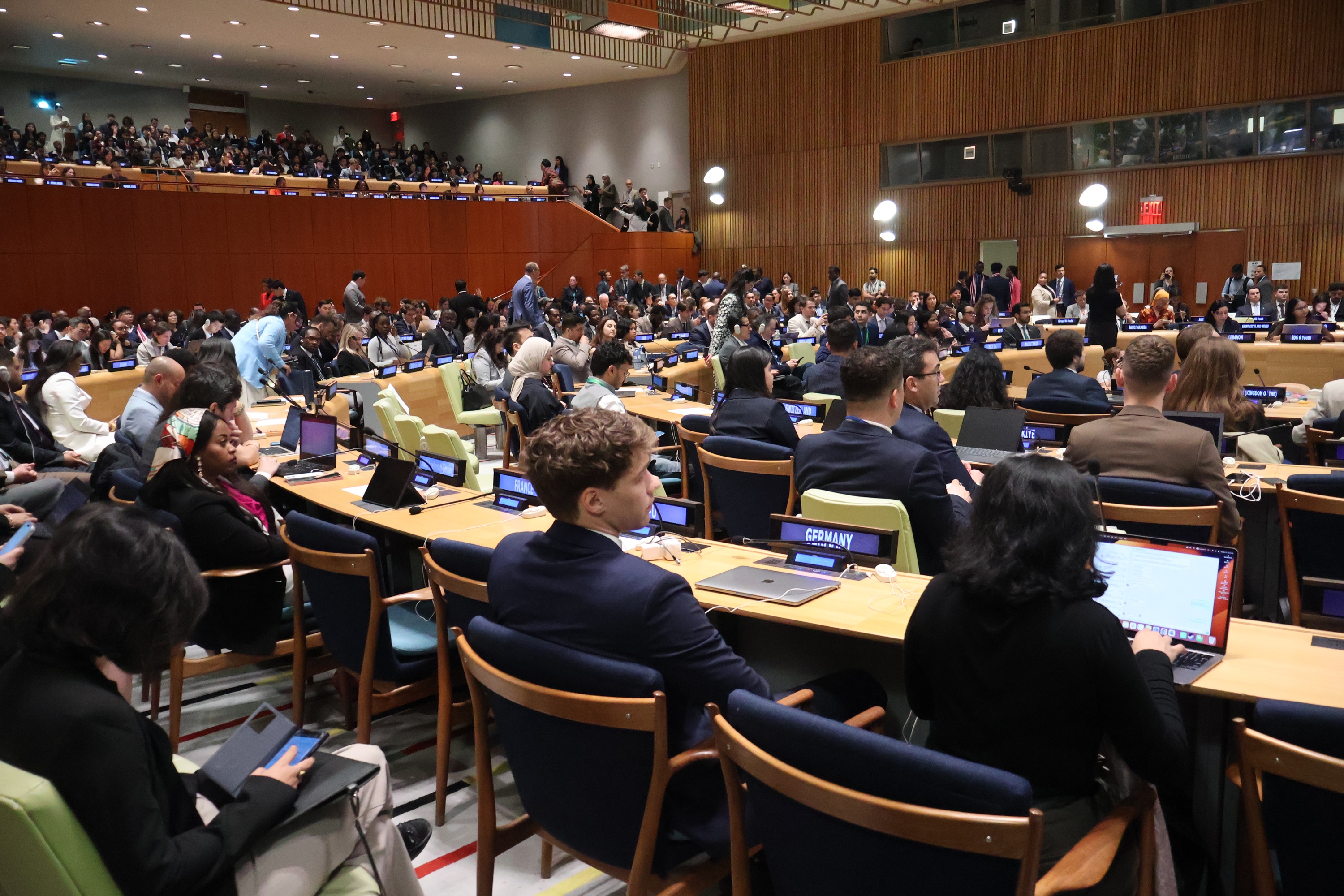
Ecosoc youth forum 2026
Canada's youth delegate, Lucas Orfanides, Advisory Board Member, Permanent Mission of Canada to the UN said it best: young people do not need promises alone. They need real support. Nifasha Adelaide, co-founder of Zimbabwe's Refugee Coalition for Climate Action said her organization plants trees, runs clean-up campaigns and grows food for her community. She does all of it on zero funding.
“Imagine,” she quizzed the room, “what we could do with meaningful partnerships.”
Tax Justice Is Youth Justice
What connected nearly every intervention in this session was a thread that YTJN works on every day: fiscal space. The decisions that shape whether young people have access to decent jobs, health care, education and social protection are made in budget rooms, tax committees and debt negotiation chambers where youth are rarely present and almost never heard.
Karachi Research Chair's Ali Jillani, from the Asia Pacific Regional CSO Engagement Mechanism said what many were thinking: at the Fourth Financing for Development Conference, Global North countries obscured over $6 trillion in unmet ODA commitments by shifting the conversation to blended finance and diversified sources. The calls for tax justice, debt resolution and addressing illicit financial flows were, again, sidelined.
Julia Anting Wolff of the Global Youth Coalition went further and called for 20% of climate finance to be allocated to youth-led initiatives, for a sovereign convention on debt as a prerequisite to the 2030 Agenda, and for youth voices to be meaningfully included in the boards of multilateral development banks. These are not radical demands. They are the minimum conditions for a system that claims to serve future generations.
Co-Design Is Not a Courtesy. It Is a Condition.
One of the strongest themes across the session was the difference between consulting young people and including them. Speaker after speaker drew that line.
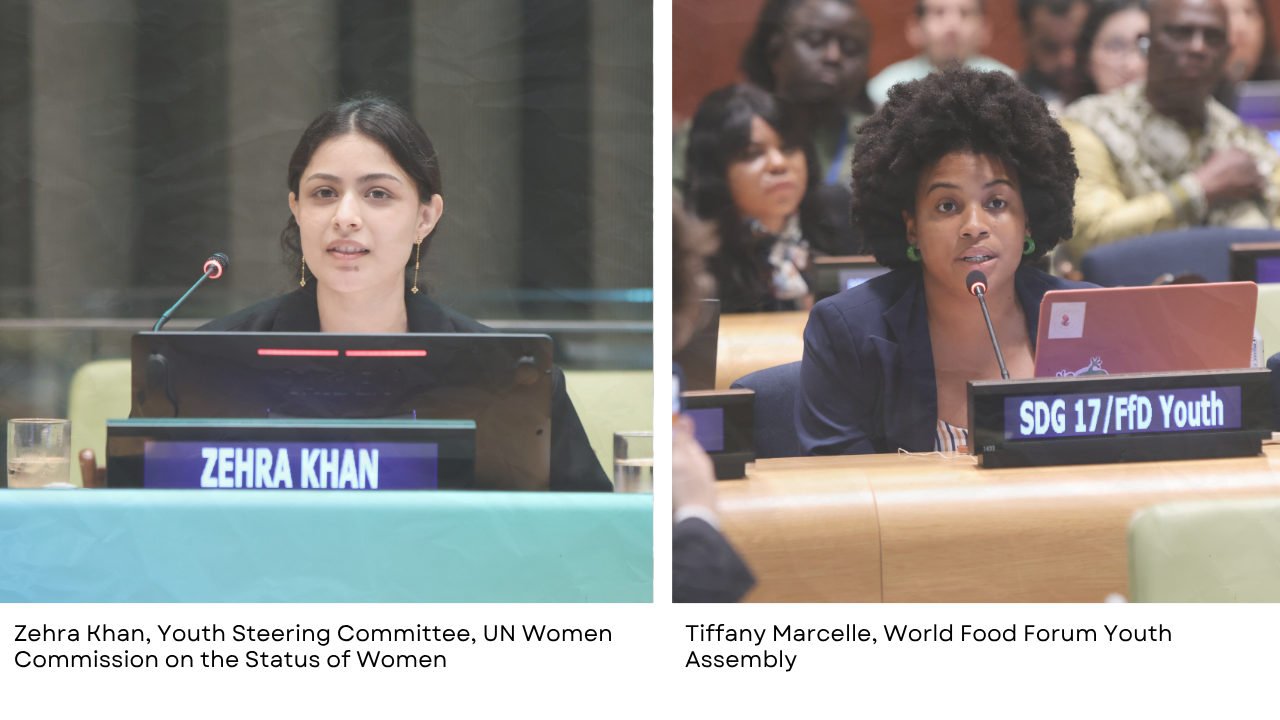
Zahra Khan of the UN Women Commission on the Status of Women asked the audience to raise their hands if they knew someone who wanted to attend the forum but could not due to financial barriers or conflict. Many hands went up. Her point was simple: if the spaces where decisions are made are inaccessible, the decisions made in them will be disconnected from the realities of the people they are supposed to serve.
L-R: Zehra Khan, Youth Steering Committee, UN Women Commission on the Status of Women and Tiffany Marcelle, World Food Forum Youth Assembly
Tiffany Marcelle of the World Food Forum Youth Assembly pointed out that 44% of employed youth globally work in agri-food systems, yet almost none of the financing directed at development reaches rural young people. She asked directly: if we are serious about scaling financing for development, why is so little of it reaching young people?
Ayesha Syed, from the Centre for Alternative Perspectives, gave a concrete proposal: classify youth-led enterprises and community work as eligible for development finance, ring-fence 10% of employment and social protection funds for youth-led businesses and cooperatives and require impact reporting using youth-collected data. These are structural changes. They are also entirely possible.
What Governments Said, and What It Means
Several governments made strong statements. Ghana announced a dedicated Ministry of Youth Development and Empowerment, which is now under the watchful eye of Honorable George Opare Addo. Morocco detailed a $20 billion territorial development programme. Serbia described the Youth Guarantee programme, which ensures young people receive an offer for employment, education or training within four months of leaving education. Canada announced $50 million in new funding for global education and skills training.
These are welcome steps. But as the MGCY Secretariat noted, the annual review of SDG 17 at the High-Level Political Forum must not be diluted. Commitments made at global forums must feed into intergovernmental negotiations. Otherwise, they remain statements.
So, what is the ASK?
Sarah Hendricks, Director, Policy, Programme & Intergovernmental Division at UN Women, closed the session with a reminder that is as relevant for tax justice advocates as it is for anyone working on youth policy: the data tells us where the gaps are, but data itself is a question of power. If young people are invisible in the data, they remain invisible in how resources are allocated.
Young people are already building solutions in their communities, on zero budgets, with no seats at the tables where their futures are being decided. The question is not whether young people are ready. The question, as Hendricks put it directly, is whether the world is ready to match that energy with the right investments.
At Youth for Tax Justice Network, our answer is that matching energy with investment starts with fair taxation, transparent public budgets, an end to illicit financial flows, and meaningful youth participation in the fiscal decisions that shape every dimension of their lives.
The money exists. The question is who controls it, who it reaches, and on whose terms.
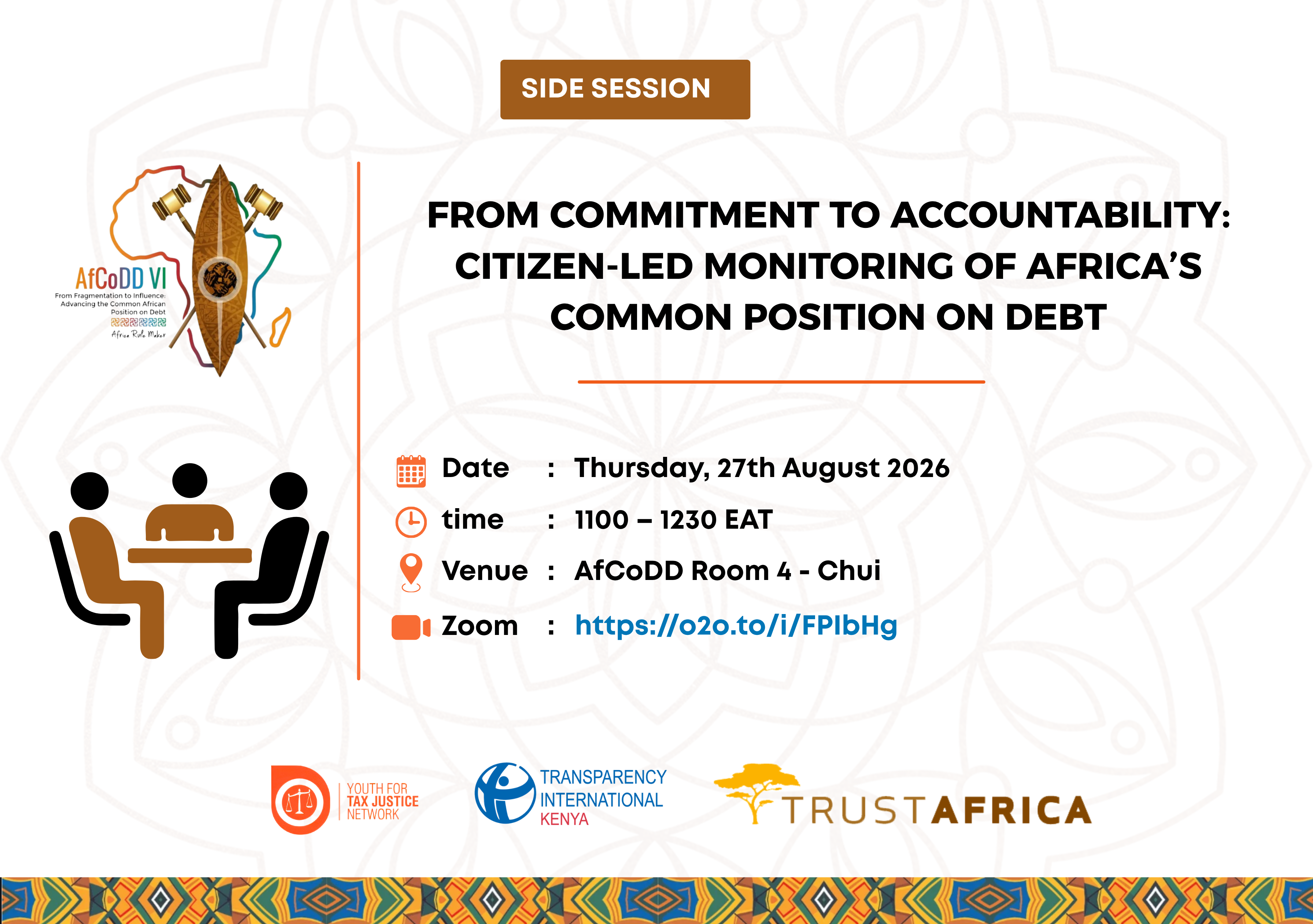
From Commitment to Accountability: Citizen-Led Monitoring of Africa's Common Position on Debt
Youth for Tax Justice Network brings its youth-led monitoring model to this partnership. Young people across Africa carry the weight of debt decisions made today. YTJN insists they...
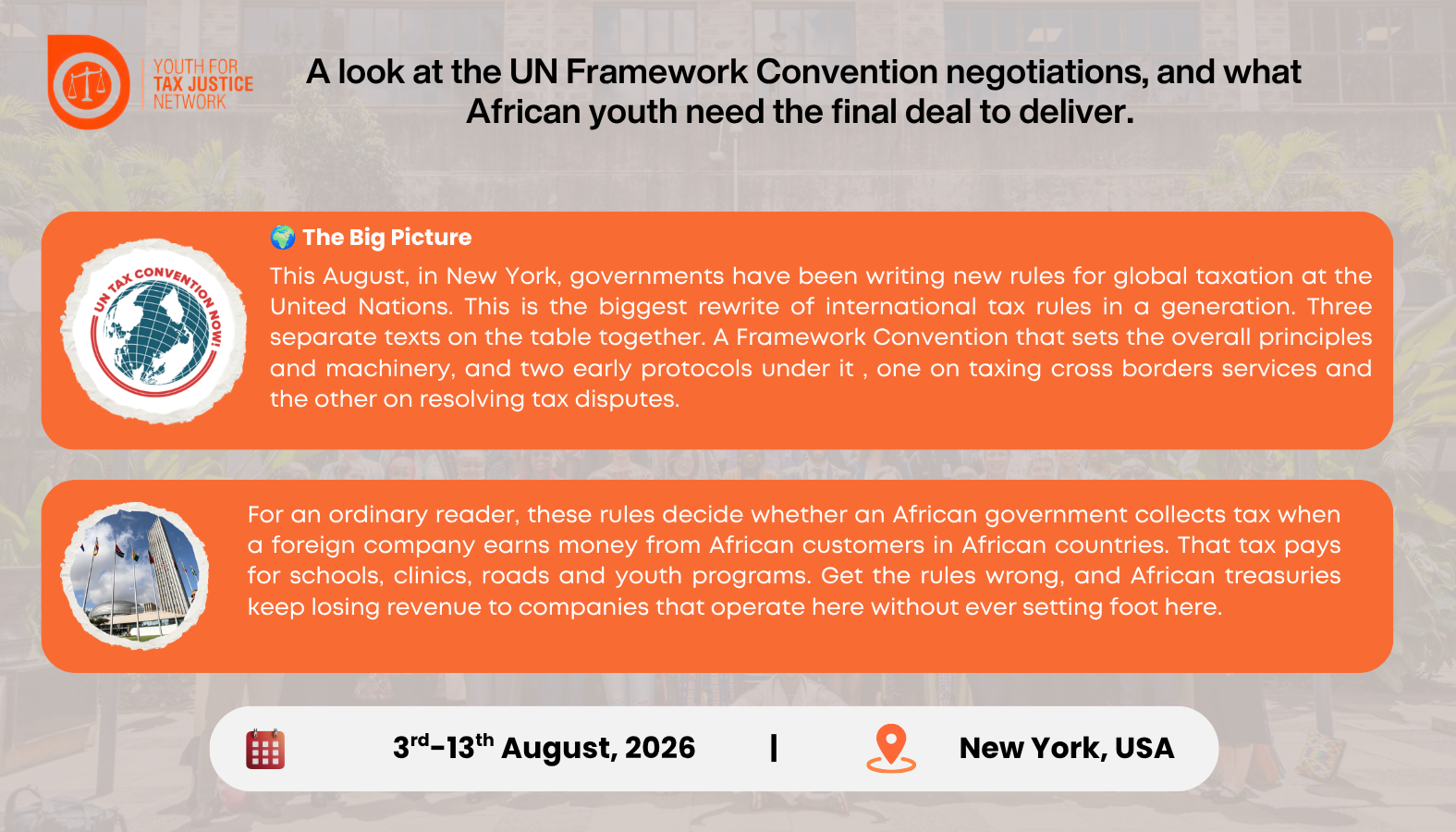
A look at the UN Framework Convention negotiations, and what African youth need the final deal to deliver.
The Framework Convention is the Parent Document. It sets out shared principles and critically; it decides how the whole new system relates to the thousands of existing bilateral ta...
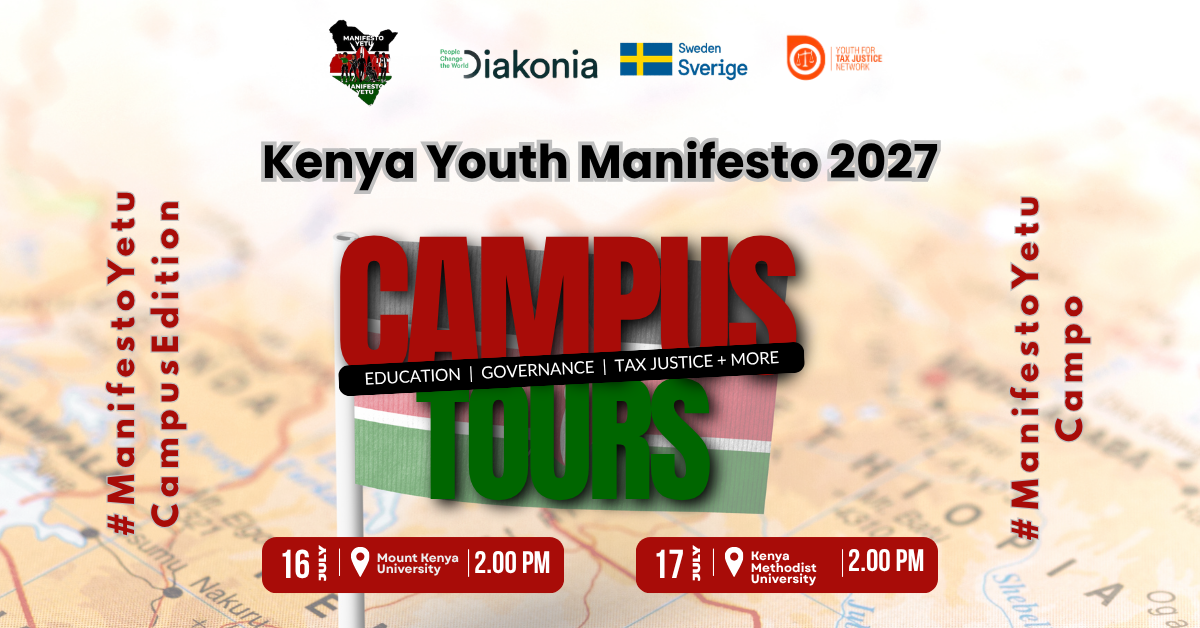
YTJN and Manifesto Yetu Launch University Consultations for the Kenya Youth Manifesto 2027
Youth for Tax Justice Network (YTJN) has partnered with the Manifesto Yetu Initiative to launch university campus consultations across Kenya. The consultations will shape the Kenya...