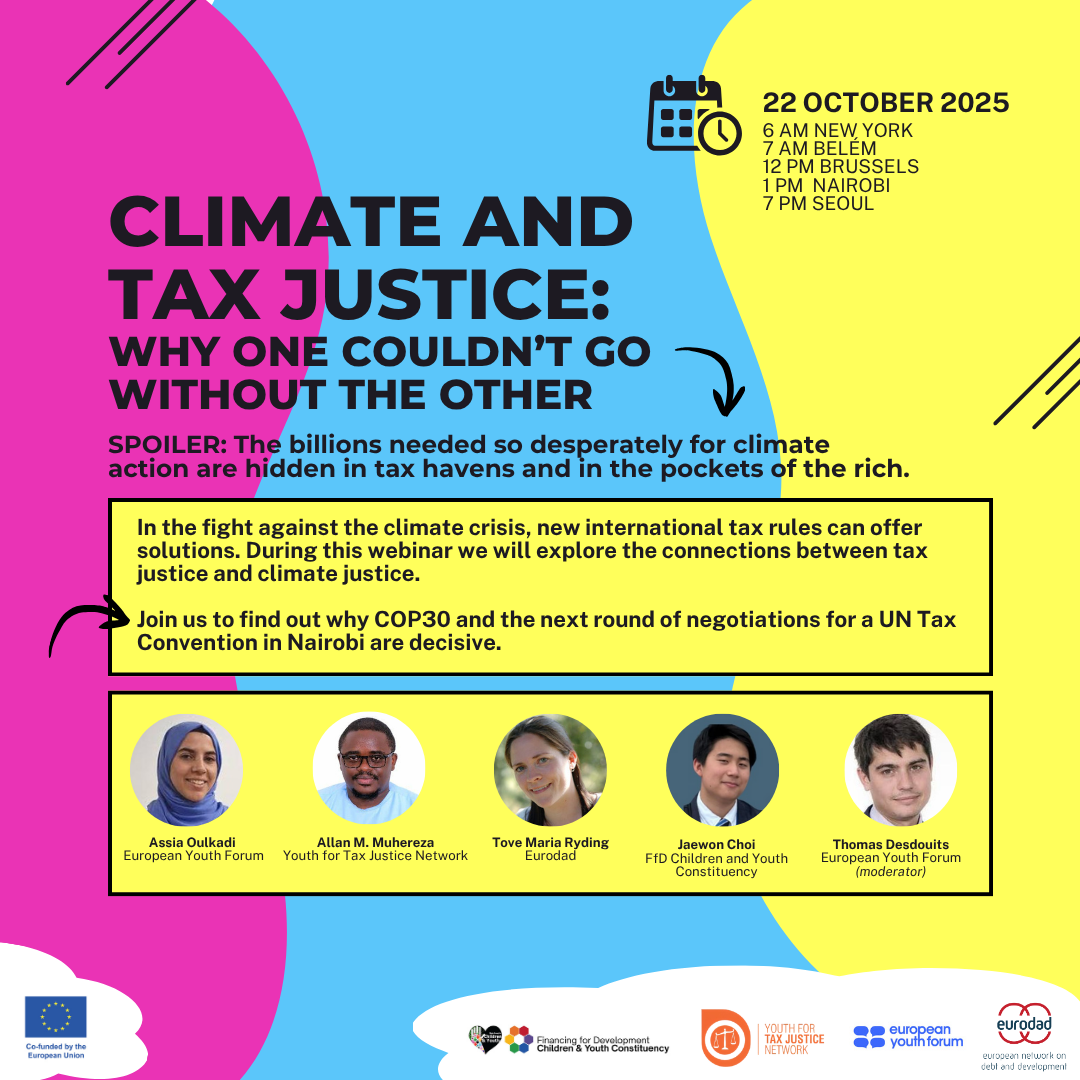
This November, young people from across the world come together to explore an urgent connection that few are talking about: how the UN Climate Conference (COP 30) in Belém and the UN negotiations for a Framework Convention on International Tax Cooperation in Nairobi are part of the same story .
Both processes, happening at the same time, will decide whether the world can finance a just response to the climate crisis. In Belém, governments will turn the promises of the Paris Agreement into concrete action, including the long-awaited New Collective Quantified Goal (NCQG) for climate finance. In Nairobi, they will negotiate the rules of a new international tax architecture that could finally eliminate tax evasion, close loopholes, and ensure that those responsible for pollution and inequality pay their fair share.
Why do these two tracks belong together? Because there will be no climate justice without tax justice. The trillions needed for adaptation, mitigation, and loss-and-damage finance are out there in untaxed wealth, corporate profits, and illicit financial flows . A fair global tax system can mobilise the funds required to meet our climate goals, reduce inequalities, and empower our countries to invest in sustainable development without going into even more debt.