Investing in Africa Mining Indaba 2026: To Mine or Not to Mine … and what does Progress through Partnerships have to do with it?
By Lurit Yugusuk - Advocacy and Policy Officer, Youth for Tax Justice Network (YTJN)
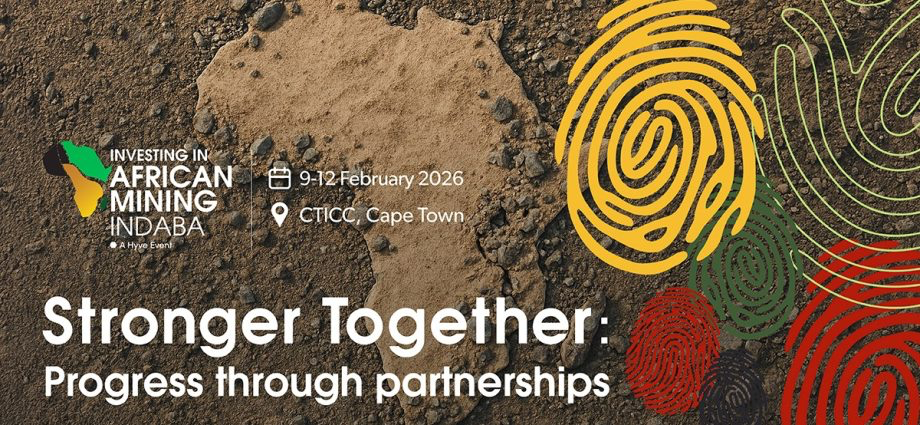
Every year, the Investing in Africa Mining Indaba convenes global leaders in policy, investment, mining, and community development to grapple with one central question: How can Africa unlock its mineral wealth equitably, sustainably, and profitably? The 2026 iteration of the Investing in African Mining Indaba, held in Cape Town, South Africa from 9-11th February and convened under the theme “Stronger Together: Progress through Partnerships,’’ delivered a record-breaking momentum and the largest attendance in the event’s 32-year history. It brought together governments, investors, industry leaders, development finance institutions, and civil society to examine how collaboration can drive sustainable growth, unlock investment, and secure critical mineral supply chains.
Related Articles
Discussions centered on strengthening Africa’s investment appeal, advancing local beneficiation, deepening value-chain integration, scaling mining technology, enhancing environmental and social governance, and mobilizing infrastructure finance. Beneath these themes ran a clear message: the future of African mining will be determined not only by geology, but by the quality of partnerships that govern it. And so the central question resurfaced:
To mine or not to mine .. and what does progress through partnerships have to do with it?
Before answering that question, it is worth reflecting on what the deliberations revealed.
On critical minerals and the issue on moving from extraction to value addition and retention
Critical minerals are part of Africa’s development trajectory. The conversation is now about how the African continent captures the full value of its resources. A dominant theme was the expansion of in-country processing and refining capacity under various critical minerals programmes.
Countries such as Nigeria and the Democratic Republic of the Congo showcased plans to build lithium, copper, and cobalt processing industries domestically rather than exporting raw ore. Beyond this, there was recognition of the Lobito Corridor, which is considered a strategic rail and logistics project linking the mineral belts of the DRC and Zambia to Atlantic export routes. The corridor is framed not only as a transport solution but as a catalyst for regional competitiveness and economic integration. Across all these, it was clear that without infrastructure, beneficiation ambitions remain rhetoric.
How about Partnerships with China within the Realm of Technology and Green Solutions?
Across most discussions, it was almost impossible to speak about mining in Africa, particularly about value addition, without referencing China as a key investor. China’s presence at the Indaba was characterized by technological ambition and a narrative of “green mining.” Firms such as LiuGong, Sunward, and Soly Technology showcased autonomous vehicles and AI-powered analytics tailored to African terrain. Automation promises improved safety and operational efficiency, particularly in deep-level mines.
Cooperation discussions, on the other side of the spectrum, focused on deploying solar and wind technologies to power mining operations, addressing both carbon intensity and chronic energy shortages that undermine local processing ambitions. Beyond this, you could easily hear delegates frame China–Africa mining cooperation as mutually beneficial, where China provides capital, technical expertise, and market access; African states provide resources and industrial demand.
Yet beneath the “win-win” framing lies a deeper question of negotiating power, fiscal terms, and long-term industrial positioning. Partnerships, if asymmetrical, risk reinforcing dependency under a green transition banner.
What does a Just Energy Transition look like?
The transition to clean energy was discussed not only as a technological shift but as a social and economic imperative. From the women in mining corners to the community stands, you could hear delegates amplify the need for community voices and called for ecologically sustainable mining. They emphasized mandatory consultation, meaningful consent, and safeguards against “green-washed” extractive injustices. Among the calls for distributive justice was the strong emphasis on gender-inclusive trade frameworks, formalizing and integrating artisanal and small-scale miners (ASM) and ensuring revenue-sharing mechanisms benefit affected communities.
So, To Mine or Not to Mine …. what does progress through partnerships have to do with it?
The answer is not binary, but is reliant on how we think about partnerships, lived realities and fiscal reform.
First, partnerships must evolve. The language and architecture of partnerships are shifting. Across governments, investors, communities, and civil society, there is growing recognition that partnerships must be co-designed, co-owned, and accountable. We are at a point where short-term extraction contracts cannot substitute for long-term development compacts. Therefore, partnerships must incorporate key elements such as shared risk, transparent fiscal regimes, clear community benefit frameworks, environmental accountability and mechanisms for dispute resolution. Without this, “progress” becomes a slogan rather than a structure.
Second, lived realities must shape governance within this ecosystem. In conversations around natural resource governance, social performance is no longer a compliance checkbox, but has become one of the elements that is central to mining’s legitimacy within the African continent and beyond. From resettlement processes to local employment quotas, policies must reflect the lived experiences and aspirations of affected communities. Decisions divorced from local realities erode trust, delay projects, and increase conflict risk.
Third, is to always remember that critical minerals are geopolitical instruments and that defines Africa’s development trajectory. . Africa’s mineral wealth now sits at the center of global industrial strategy, with actors from China, the United States, and the European Union competing to secure supply chains. This then raises an urgent continental question on whether African states will negotiate individually or continentally. In this case, progress through partnerships must also mean intra-African cooperation through harmonized fiscal policies, regional mineral corridors, coordinated industrial strategies and perhaps even shared infrastructure financing.
The fourth part of this response would be that fiscal governance will determine the outcome. At its core, mining is a public finance question … Who captures the rents? How are royalties structured? Are tax incentives eroding long-term revenue? Is value addition matched with industrial policy? Mining-led growth translates into structural transformation only when revenues are transparently mobilized and strategically reinvested into education, infrastructure, energy systems, and domestic enterprise development. Without fiscal discipline and accountability, mineral wealth risks becoming another cycle of extraction without transformation.
Lastly, technology cannot substitute for trust. We can collectively agree that AI-powered fleets and automated drills improve efficiency hence more output and higher returns. Renewable-powered operations also play a role in reducing emissions. However, technology cannot resolve land disputes, displacement grievances, or inequitable revenue-sharing arrangements and this means that we cannot ignore the value of partnerships.
Remember that the future of African mining will not be determined by what lies beneath the soil alone … It will be determined by the partnerships built above it.
To partner with the Youth for Tax Justice Network (YTJN), reach out to us via: info@ytjn.org.
Related Articles
News
From Commitment to Accountability: Citizen-Led Monitoring of Africa's Common Position on Debt
Youth for Tax Justice Network brings its youth-led monitoring model to this partnership. Young people across Africa carry the weight of debt decisions made today. YTJN insists they...
A look at the UN Framework Convention negotiations, and what African youth need the final deal to deliver.
The Framework Convention is the Parent Document. It sets out shared principles and critically; it decides how the whole new system relates to the thousands of existing bilateral ta...
YTJN and Manifesto Yetu Launch University Consultations for the Kenya Youth Manifesto 2027
Youth for Tax Justice Network (YTJN) has partnered with the Manifesto Yetu Initiative to launch university campus consultations across Kenya. The consultations will shape the Kenya...