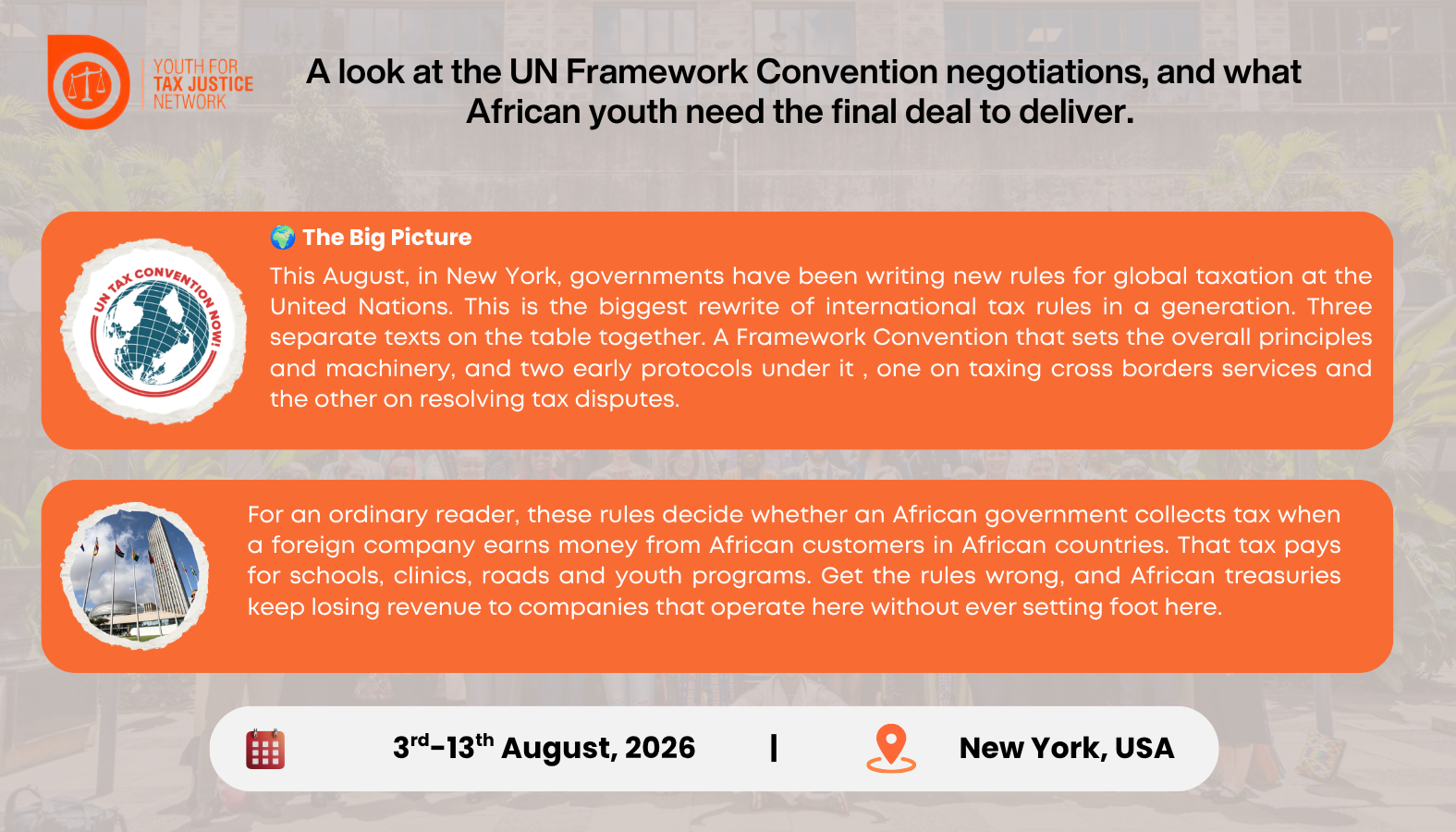
This August, in New York, governments have been writing new rules for global taxation at the United Nations. This is the biggest rewrite of international tax rules in a generation. Three separate texts on the table together. A Framework Convention that sets the overall principles and machinery, and two early protocols under it , one on taxing cross borders services and the other on resolving tax disputes.
For an ordinary reader, these rules decide whether an African government collects tax when a foreign company earns money from African customers in African countries. That tax pays for schools, clinics, roads and youth programs. Get the rules wrong, and African treasuries keep losing revenue to companies that operate here without ever setting foot here.
Because the Convention and the two protocols do distinct jobs, let’s look at them independently to understand the full picture.
Related Articles
The Framework Convention: Who Answers To Whom
The Framework Convention is the Parent Document. It sets out shared principles and critically; it decides how the whole new system relates to the thousands of existing bilateral tax treaties already in force around the world.
This is where Article 21 comes in, and it produced one of the sharpest fights of the fifth session. Many existing tax treaties were signed decades ago, often on unequal footing, and still follow old rules built around physical offices and factories rather than digital reach. Article 21 asks states to take progressive steps to align those old treaties with the new Convention, including renegotiating them where needed.
Wealthier countries, including the UAE, the UK, Switzerland and several EU States pushed to soften that obligation, arguing it interferes with sovereignty agreements freely entered into. The Africa Group, backed by India and Brazil, argued that without a firm duty to renegotiate, the Convention becomes symbolic rather than real. Tax Justice Network Africa (TJNA) made the point best during these talks. Bilateral renegotiation has historically gone badly for developing countries, since they often renegotiate under the threat of investment being pulled if they push too hard. Leave renegotiation optional, and the same imbalance simply continues under a new name. (See the Day Five Roundup.)
A second Convention level fight concerns reservations, meaning whether a country can on while opting of specific provisions. The Africa Group, along with the African Union and the Africa Tax Administration Forum, opposed allowing reservations at all, warning that a conversation riddled with opt outs ends up as different versions of the same document for different countries. The UAE, Switzerland, Czechia and other argued reservations are needed to protect national sovereignty and encourage broader participation. Where this lands will shape how binding the entire package ends up being, protocols included. (Also covered in the Day Five Roundup.)
Beneath all of this, there is a third fight. Compare the July 2026 zero draft against the January 2026 text on three fronts, and you'll see a pattern. The language got softer exactly where it counted.
Starting with the article on fair allocation of taxing rights, the one the African Union called the promise at the heart of this Convention. The January 2026 text recognised that taxing rights belong to jurisdictions where value is created, where markets sit, where revenues arise or where economic activity takes place. The July draft dropped that language for a vaguer reference to economic contribution and dropped the explicit link to treaty renegotiation. The African Tax Administration Forum warned the current text confers no taxing right at all, since a promise to explore and pursue is not a rule a tax administration can apply. A smaller but telling fight broke out over a single word. The draft links its list of factors with and rather than or, meaning a country would need to prove several at once rather than qualify on any one of them. The Centre for Fiscal Studies proposed fixing this by making clear that any single factor on the list is enough on its own, a fix that gained wide support. Kenya, Senegal and Zambia backed restoring the stronger January wording overall. (Debated over the Day One and Day Two Roundups.)
Move to the article on high-net-worth individuals. The January draft said states shall develop and implement measures to detect, deter and prevent tax avoidance and evasion by the wealthiest taxpayers, and shall share information on the structures they use to escape tax. The July draft downgrades that states shall cooperate to enhance such measures and narrows information sharing to general information only. A new clause was also added requiring this cooperation to respect each state's sovereign right to determine its own tax design. India challenged this shift directly at the fifth session. Individuals holding the largest fortunes on the planet, some paying under one percent of their wealth in tax, remain the group hardest to reach under the current international system. Softer language here keeps that gap open. (See the Day Two Roundup.)
Do the same comparison on illicit financial flows. The January draft required states to develop and implement measures against tax related illicit financial flows, enforced through mutual assistance and information exchange. The July draft asks states only to cooperate, with enforcement folded into that same softer verb. Africa loses an estimated 89 billion dollars a year to these flows. A weaker obligation on paper does little to close that gap in practice. (Also from the Day Two Roundup.)
Governments defending the softer language made four arguments during the session. Some said flexible wording builds the consensus needed to get a treaty adopted at all. Some said binding obligations risk conflicting with existing international law and treaty commitments. Some argued alignment with existing OECD tax frameworks avoids duplicating work already underway elsewhere. Others said binding language intrudes on national sovereignty over tax policy.
The Africa Group and its civil society allies, including Tax Justice Network Africa, rejected each argument in turn. On consensus, they pointed out that the negotiating mandate itself calls for strong and concrete commitments, and that ambitious language has secured agreement before when states negotiate in good faith. On international law, they noted that obligations between parties to this Convention do not bind nonparties, and that the Vienna Convention on the Law of Treaties already allows later treaties to modify earlier ones between the same states. On OECD alignment, they argued the OECD process has not stopped preferential tax regimes or profit shifting, and that a third of UN member states sit outside that process entirely, so matching its ambition guarantees the same limited results. On sovereignty, they made the sharper point that a country stripped of the practical power to tax mobile capital and hidden wealth has no real sovereignty to protect in the first place. Binding cooperation restores that power rather than taking it away.
Protocol One: Taxing Services Without A Physical Footprint
For decades, international tax law followed one core idea. A country could only tax a foreign company’s profits if that company had a physical presence there, an office, a factory, staff on the ground. No physical presence, no tax bill. Lawyers call this the permanent establishment rule.
That rule made sense when companies needed buildings and workers in a country to sell there. It makes far less sense now. A streaming platform, a cloud computing provider, a social media company or an online advertising network earns money from African users every day without opening a single office on the continent. Under the old rule, the country where the customers live collects nothing. The country where the company is headquartered collects everything. Closing this gap is the entire purpose of Protocol One.
The draft introduces new rules for fees for services and income from automated digital services, things like online advertising, cloud computing, digital platforms, and online gaming. Instead of asking only where the country has offices, it asks where the consumer sits, where the user data comes from, or where the payer is based. This is a genuine shift toward the interests of countries like those across Africa, where the customers are, but not the corporate headquarters.
Three problems came up repeatedly in the negotiations on this protocol, first raised when delegates got their initial look at the full draft text in the Day Six Roundup and argued through in detail in the Day Seven Roundup.
Physical presence still shapes the outcome. Under Article 9 of the draft, a company can place one or two staff in a country and use that thin presence to shape how much profit gets taxed there, while the actual value creation, the millions of local users and their data, counts for less. The African Group pushed to widen the definition of physical presence and tighten how profits get allocated once it applies.
Optionality could hollow out the protocol. Richer countries pushed hard for flexibility, meaning states could pick and choose which provisions apply to them. The Africa Tax Administration Forum warned this turns the protocol into something with no fixed core at all, since a country could opt out of the very provisions that would let Africa tax digital giants.
Gross versus net taxation remains unresolved. Gross basis taxation is simpler for tax authorities with limited staff and systems to administer. Net basis taxation is more accurate but needs detailed profit data most tax authorities in the region do not currently have easy access to. Business groups like the International Chamber of Commerce argued gross taxation discourages investment. African delegation argued gross taxation is often the only workable option given capacity constraints.
Protocol Two; When A Dispute Has No Clear Home
Protocol Two is meant to give countries a fair, efficient way to resolve tax disputes with each other, instead of losing years and revenue to unresolved disagreements. But several African delegations flagged a capacity problem during the talks.
Where two countries disagree and no tax treaty exists between them, the draft offers a consultation process. Algeria and Tanzania both warned that African tax administrations could end up pouring scarce staff time and resources into these consultations without any guarantee of a resolution, since any understanding reached is explicitly nonbinding. Nigeria was blunter still, arguing the mechanism offers no real fix at all. (See Day Eight Roundup)
A further fight broke out over whether the new dispute protocol should override existing treaty mechanisms by default, or sit alongside them only if countries opt in. Kenya, speaking for the Africa Group, argued the protocol should be the default framework precisely because many existing treaty provisions reflect the same historical imbalances the whole convention is meant to correct. Wealthier states, including Switzerland, France and the Netherlands, wanted the opposite default, preserving existing arrangements unless a country actively chooses otherwise. (Both fights are covered in the Day Nine Roundup, the final day of the session.)
What The Final Convention Must Deliver for African Youth
Taken together, these three tracks point to five things the final text needs to lock in.
Real taxing rights that do not depend on physical presence. Digital and cross border service income should be taxable where the users and consumers are, with physical presence treated as one factor among several, not the entry gate to taxation.
A firm, not optional, obligation to update old treaties. Article 21 needs teeth. A convention that only invites renegotiation, without a deadline or a clear process, changes little for countries stuck with outdated agreements.
Limits on optionality for the provisions that matter most. Countries can debate procedural detail. The core taxing rights that determine whether Africa collects revenue from digital giants cannot be something wealthier states simply opt out of.
A workable, well-resourced dispute mechanism. Consultation processes that cost time and staff without a binding outcome help no one. African tax administrations need mechanisms matched to their actual capacity, alongside real technical support, not mechanisms designed around the assumption that every country already has a dense treaty network and a large legal team.
A convention that protects revenue, not just principle. Every dollar an African government fails to collect from a multinational is a dollar not spent on a classroom, a clinic or a youth employment program. The final test of this convention should be simple. Does it put more real revenue into African hands, or does it just rearrange the language around the same old imbalance.
Why This Matters To You
Negotiators from 193 countries are shaping decisions that will affect government budgets in Africa for decades. Young people rarely get a seat at that table, yet youth programs, education budgets and job creation all depend on the outcome. Written submissions on the current drafts are due by the end of August, ahead of the sixth negotiating session in Nairobi later this year.
Follow along, ask questions, and push your own government to take a strong position in these talks. A tax system that finally works for people, not just profits, will not build itself.
Related Articles
News
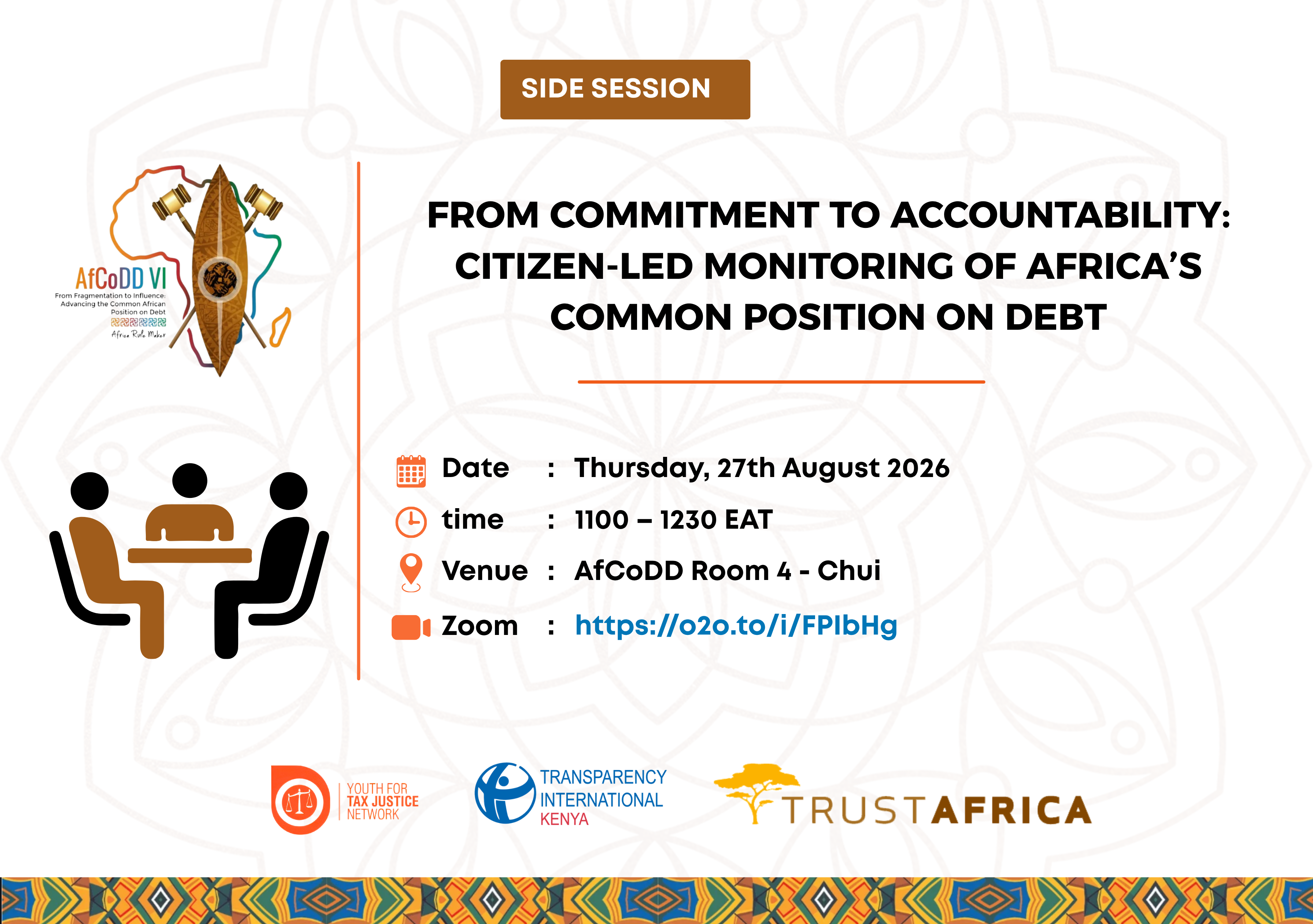
From Commitment to Accountability: Citizen-Led Monitoring of Africa's Common Position on Debt
Youth for Tax Justice Network brings its youth-led monitoring model to this partnership. Young people across Africa carry the weight of debt decisions made today. YTJN insists they...
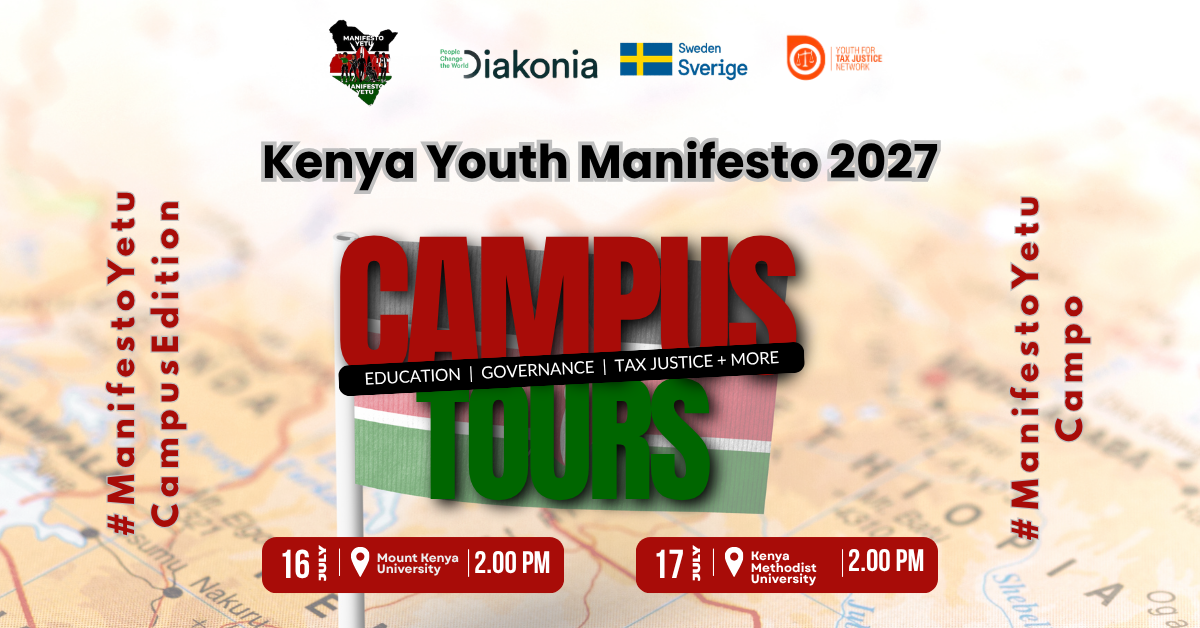
YTJN and Manifesto Yetu Launch University Consultations for the Kenya Youth Manifesto 2027
Youth for Tax Justice Network (YTJN) has partnered with the Manifesto Yetu Initiative to launch university campus consultations across Kenya. The consultations will shape the Kenya...
Africa Day and the Development Promises Still Owed to Youth
The theme for this year's Africa Day is 'Assuring Sustainable Water Availability and Safe Sanitation Systems to Achieve the Goals of Agenda 2063,' which calls for honesty. This the...